


Blog
Compliance Risks in Property Management
The property management industry is facing increasing regulatory scrutiny across Australia, with compliance requirements tightening around tenancy legislation, safety standards, financial handling, and privacy obligations.
- July 18, 2025

Navigating the Growing Compliance Risks in Property Management
The property management industry is facing increasing regulatory scrutiny across Australia, with compliance requirements tightening around tenancy legislation, safety standards, financial handling, and privacy obligations. Agencies that fail to keep up with these evolving standards expose themselves to significant risks from fines and legal action to reputational damage and loss of business.
Let’s explore the key compliance risks property management agencies face today, why traditional management systems often fall short, and how agencies can take a proactive approach to compliance in a shifting landscape.
Legislative Changes and Tenant Protection Reforms
Recent years have seen sweeping reforms to rental laws in many Australian states, often with a strong focus on tenant protections. These include:
- Stricter notice periods and limits on termination grounds
- Mandatory disclosure obligations before and during tenancy
- Caps on rent increases and prescribed methods for calculation
- New rules around maintenance response times and property standards
Agencies face significant risk if they mismanage notice periods or lease conditions, fail to disclose material facts to tenants, or breach new requirements around rental increase caps and prescribed timelines. Even minor oversights in these areas can expose agencies to disputes, fines, or formal complaints.
Keeping up with legislation requires constant vigilance. Relying on manual processes or outdated systems increases the risk of non-compliance and costly disputes.
Financial Compliance and Trust Account Management
Handling client funds, including rent, bonds, and payments to owners, demands strict adherence to trust account regulations under each state’s property management legislation. Auditing requirements are increasing, and regulators are adopting digital auditing tools for greater oversight.
Property managers risk serious consequences if they mismanage trust accounts, make reconciliation errors, or fail to adhere to strict disbursement rules. Missing audit deadlines or having breaches uncovered during audits can also lead to regulatory action, financial penalties, or damage to the agency’s license and reputation.
Errors in trust accounting, even if unintentional, can trigger regulatory investigations, fines, and even license suspension. Manual trust management or fragmented systems heighten this risk, particularly for growing portfolios.
Maintenance, Safety, and Compliance Obligations
Property managers are increasingly held responsible for ensuring properties meet safety standards, including:
- Smoke alarms
- Pool safety compliance
- Electrical and gas safety checks
- Habitability standards and urgent repairs
Failing to track and complete essential compliance checks leaves agencies open to significant risk. Missed maintenance can result in tenant injury claims, while managing non-compliant properties exposes agencies to legal liability and potential enforcement action.
Relying on spreadsheets or ad-hoc tracking leaves too much room for human error. Without automated workflows and compliance tracking, agencies risk failing their duty of care, with serious financial and legal consequences.
Data Privacy and Cybersecurity
With property management systems now housing sensitive tenant, owner, and financial information, agencies are expected to meet stringent data privacy standards under Australian privacy law (and, in some cases, international regulations).
Agencies are at risk if client information is exposed through data breaches, if they fail to implement adequate cybersecurity measures, or if they don’t comply with data handlingrequirements and breach notification laws. These lapses can lead to regulatory penalties, reputational damage, and loss of client trust.
Data security is no longer optional. Agencies need to ensure their systems, and the third-party providers they use, are compliant with privacy obligations and secured against breaches.
Compliance in property management is no longer a “set and forget” exercise. As regulations tighten, agencies need to adopt proactive compliance frameworks supported by technology that reduces risk, automates tracking, and ensures transparency.
Relying on outdated systems, manual processes, or fragmented workflows leaves agencies vulnerable to compliance failures, and the consequences are only becoming more severe.
Those who invest in robust, automated property management platforms that integrate compliance monitoring will be better positioned to protect their business, their clients, and their reputation in this evolving regulatory environment.
- All Posts
- Blog
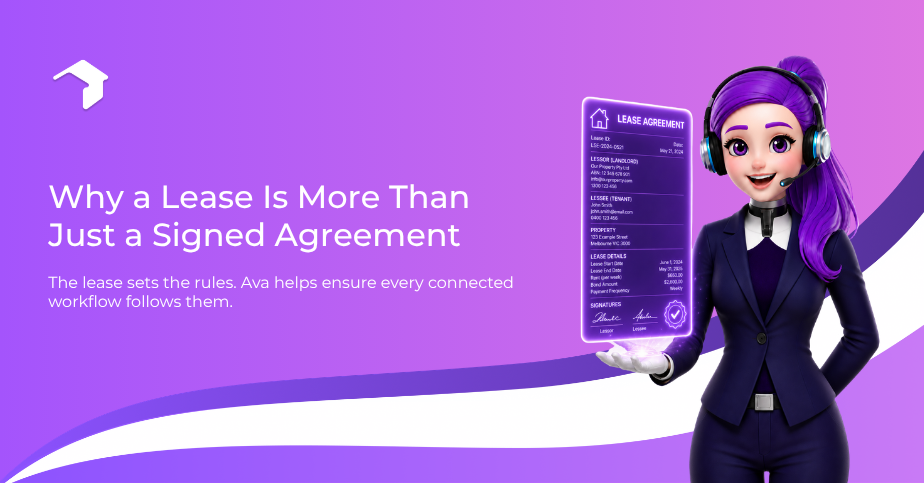
A lease is more than a document. It's the operational blueprint for the entire tenancy. The lease sets the rules....
Property maintenance is about more than repairs. Learn how Ava helps property managers manage approvals, trades, communications and owner expectations...
Property management payments can look simple on the surface.